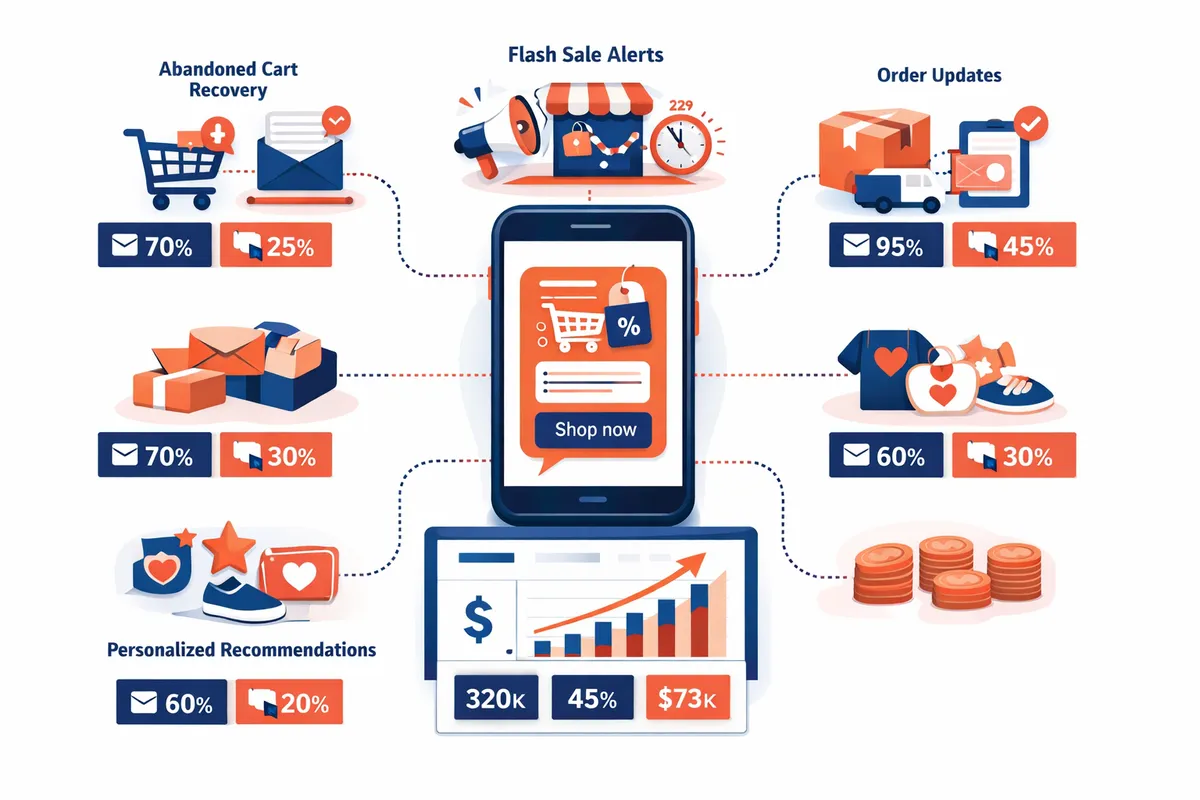
Abandoned Cart Recovery via SMS
Cart abandonment is the single biggest revenue leak in e-commerce. The average cart abandonment rate is 70 percent. For an Atlanta store processing $50,000 in monthly orders, that means roughly $116,000 in potential revenue is left in abandoned carts every month.
SMS recovery messages consistently outperform email by three to five times on conversion rate.
Timing is critical. The best time to recover a cart is within the first hour. After that, intent drops rapidly. Email might sit unread for hours. A text reaches the customer immediately.
Friction is minimal. A well-crafted cart recovery text includes a direct link back to the cart. One tap. No logging in, no searching for the email, no navigating from scratch. The path from reminder to purchase takes seconds.
Personalization increases recovery. When the text references the specific product, includes the customer's name, and perhaps offers a small incentive, recovery rates climb. Generic messages convert at 5 to 8 percent. Personalized messages with specific product mentions convert at 12 to 18 percent.
Building an Effective Cart Recovery Flow
Message 1 (1 hour after abandonment). Friendly reminder with a direct link. No discount. This alone recovers 8 to 12 percent of abandoned carts.
Message 2 (24 hours). Social proof or urgency. "Only 3 left in your size." Converts another 3 to 5 percent.
Message 3 (48 hours, optional). Small incentive for higher-value carts where margins support it. "Here is 10 percent off to help you decide." Captures remaining high-intent abandoners.
We build these flows using marketing automation tools that trigger based on cart value, customer history, and abandonment patterns. First-time visitors get different treatment than loyal repeat customers.
Flash Sales and Time-Sensitive Promotions
SMS is the perfect channel for promotions where timing determines success.
Holiday and seasonal promotions. Atlanta's retail calendar includes unique opportunities. Peachtree Road Race weekend. Atlanta United match days. Music Midtown. Dragon Con weekend. Sweetwater 420 Fest. National campaigns miss these. Atlanta-specific SMS campaigns timed to local events create relevance that generic promotions cannot match.
Email open rates drop during peak shopping periods because every brand is sending. SMS cuts through. E-commerce brands combining email and SMS for major promotions typically see 20 to 30 percent higher revenue than email alone.
Product launches. SMS subscribers get first access. Giving them early access or a launch-day discount creates excitement and drives immediate sales. A well-timed launch text can generate 15 to 25 percent of first-week revenue.
Inventory clearance. Sitting on excess inventory costs money. A flash sale via SMS with a 48-hour window moves product quickly. The urgency of SMS drives faster action than email or social.
Limited quantity alerts. "Only 12 units remaining" creates genuine urgency because customers know by the time they check email, the product might be gone. SMS delivery speed makes these alerts credible.
The key is restraint. Two to four promotional messages per month is the sweet spot. Every message should deliver genuine value.
Personalized Customer Journeys
The highest-performing SMS programs go beyond promotions to build relationships that drive repeat purchases and lifetime value.
Welcome sequences. A new subscriber's first-purchase discount converts at 15 to 25 percent. This is often the highest-converting SMS you will ever send.
Post-purchase follow-ups. Shipping confirmation, delivery notification, experience follow-up. These build trust and open the door for review requests and repeat purchases.
Restock reminders. For consumable products, automated reminders based on typical usage cycles bring customers back. A coffee brand reminding subscribers at the 25-day mark captures purchases that would otherwise go to competitors.
Birthday and anniversary offers. Personalized discounts that feel like gifts, not marketing. These have some of the highest conversion rates of any SMS type.
Back-in-stock alerts. When a customer viewed or wishlisted an out-of-stock item, a text notification when it returns converts at 25 to 35 percent.
VIP messaging. Your top 10 to 20 percent of customers by purchase frequency deserve exclusive communication. Early access, VIP-only products, and personalized recommendations keep your best customers spending.
Building these journeys requires proper segmentation and CRM integration. The data powering personalization should pull from purchase history, browsing behavior, and preferences.
Compliance and List Building
SMS marketing is regulated under the Telephone Consumer Protection Act and additional state laws. Non-compliance carries statutory damages of $500 to $1,500 per unsolicited text. This is not optional.
Compliance Requirements
Explicit opt-in. Every subscriber must provide clear consent. Pre-checked boxes do not count.
Clear opt-out. Every message includes "Reply STOP to opt out." Requests honored immediately and automatically.
Message frequency disclosure. At signup, state how often subscribers will hear from you. "Expect 2 to 4 messages per month."
Quiet hours. No texts before 8 AM or after 9 PM in the subscriber's local time zone.
Building Your Atlanta SMS List
Checkout opt-in. Add an SMS checkbox during checkout. Customers already providing phone numbers for shipping are primed to subscribe. This adds 15 to 25 percent of customers to your SMS list.
Website pop-ups. A discount offer in exchange for a phone number. Test timing carefully. Pop-ups after 30 seconds or on exit intent perform better than immediate ones.
Social media promotion. Use your social channels to promote SMS-exclusive offers. Convert followers into subscribers you own.
Email cross-promotion. Your existing email list is a warm audience. Include SMS sign-up in email campaigns targeting engaged subscribers.
In-person events. Atlanta's market scene (Ponce City Market, Krog Street Market, BeltLine pop-ups) provides opportunities to collect opt-ins with QR codes at your booth or store. These subscribers are already familiar with your brand.
Measuring SMS Performance
Revenue per message. Total SMS-attributed revenue divided by messages sent. Healthy benchmarks: $0.50 to $2.00 depending on average order value and list quality.
Conversion rate. Cart recovery texts: 8 to 18 percent. Promotional texts: 2 to 5 percent. Welcome offers: 15 to 25 percent.
Opt-out rate. Healthy rate is below 2 percent per campaign. Above 5 percent signals over-sending or irrelevant content.
List growth rate. Net new subscribers minus opt-outs. Healthy growth: 5 to 10 percent monthly.
Customer lifetime value impact. SMS subscribers typically show 25 to 40 percent higher lifetime value than non-subscribers.
We track all metrics through analytics dashboards that connect SMS performance to actual revenue.
SMS and Your Broader Marketing Stack
SMS is not a replacement for email, social, or paid advertising. It is the amplifier that makes every other channel more effective.
A product launch email goes out at 9 AM. A follow-up SMS at 2 PM catches people who did not open the email. A retargeting ad on Instagram that evening hits people who clicked the SMS but did not buy. Each channel reinforces the others.
The brands winning in Atlanta e-commerce orchestrate their channels into a cohesive system. SMS handles urgency and personalization. Email handles depth and storytelling. Social handles discovery. Paid advertising handles acquisition. Together, they create a revenue engine no single channel could build alone.
Atlanta E-Commerce SMS Opportunities
Atlanta's market creates unique SMS advantages that national strategies miss.
Weather-triggered campaigns. Georgia summers drive demand for specific products. A sudden cold snap in February creates urgency for winter gear. Connecting your SMS program to weather data enables automated, relevant promotions.
Local event tie-ins. Atlanta United matches, Hawks and Braves games, Music Midtown, Dragon Con, and hundreds of neighborhood festivals create natural promotion windows. Tying offers to local events makes messages feel relevant rather than random.
Neighborhood targeting. If you have physical locations or serve specific areas, SMS campaigns targeted to customers near Ponce City Market, Atlantic Station, or Lenox Square create hyper-local relevance.
Community connection. Atlanta shoppers value supporting local businesses. SMS messages that reinforce your Atlanta roots, mention your presence at local markets, or reference community involvement build loyalty that national brands cannot replicate.
FAQ
Q: How much does SMS marketing cost for an Atlanta e-commerce store?
Most platforms charge $0.01 to $0.05 per message plus a monthly fee of $25 to $500 depending on list size. For a store with 5,000 subscribers sending 8 messages monthly, expect $200 to $500 total. A single well-performing campaign can generate thousands in revenue, delivering 10x to 25x ROI.
Q: How often should I text my customers?
Two to four promotional messages per month. Transactional messages (order confirmations, shipping updates) do not count. Start conservative and increase only if opt-out rates stay below 2 percent.
Q: What is the difference between SMS and MMS?
SMS is text only, limited to 160 characters. MMS supports images, GIFs, and longer text. For e-commerce, MMS with product images converts 15 to 20 percent higher. The cost per MMS is higher ($0.03 to $0.10) but improved conversion usually justifies it.
Q: Can SMS work for small Atlanta e-commerce stores?
Absolutely. SMS scales down effectively because per-message costs are low and conversion rates are high regardless of list size. A store with 500 engaged subscribers running a crafted campaign generates meaningful revenue. List quality matters more than list size.
Q: How do I avoid SMS messages being blocked by carriers?
Use a registered business phone number, avoid all-caps and excessive punctuation, include your business name, honor opt-outs immediately, and maintain consistent sending patterns. Working with a reputable SMS platform handles most requirements automatically.
Q: What is the best SMS platform for e-commerce?
Depends on your stack. Klaviyo is strong for Shopify stores with existing email. Attentive is built for e-commerce SMS at scale. Postscript integrates deeply with Shopify. For smaller stores, SMSBump offers affordable entry. We help evaluate options based on your requirements and marketing technology stack.