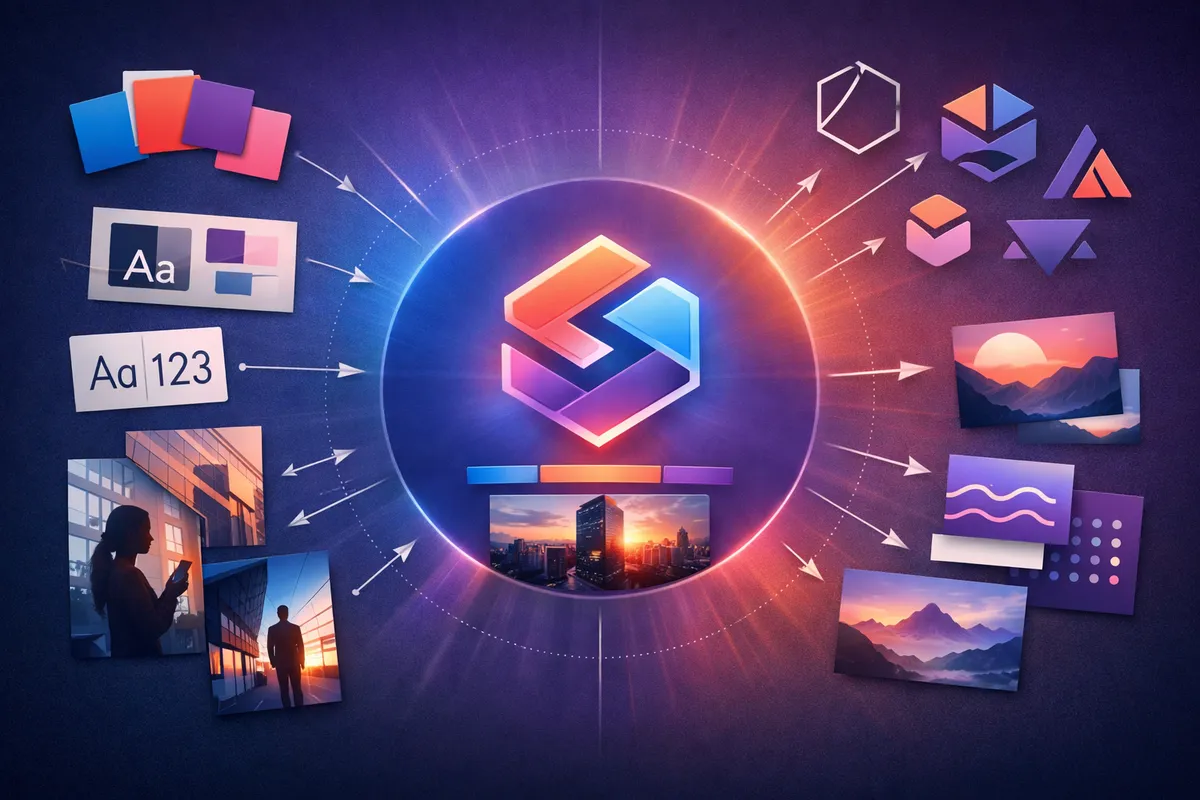
The Brand Strategy Foundation
Every enduring brand starts with strategic clarity. Before designing anything visual, answer five foundational questions.
1. Who Is Your Customer?
Not "everyone." Not "businesses." A specific person with specific needs. A financial planning startup targeting "anyone needing advice" builds a generic brand. One targeting "tech professionals aged 28 to 40 earning $120,000-plus who want to maximize equity compensation" builds a brand that resonates deeply with exactly the right audience.
For Atlanta startups, customer definition often includes geographic and cultural dimensions. Are you selling to Atlanta-based companies specifically? To the Southeast region? To enterprises with Atlanta offices? Each audience requires different positioning.
2. What Problem Do You Solve?
Not what your product does. What problem it eliminates. Customers buy outcomes, not features. Frame the problem in your customer's language. Not in technical terms or industry jargon. In the words they would use describing their frustration to a colleague at a coffee shop on Peachtree Street.
3. Why Should They Choose You?
Your competitive advantage is the combination of capabilities, approach, and values that makes you the best option. Maybe you specialize in their industry. Maybe your process is simpler. Maybe your team has unique experience from building companies in Atlanta's fintech cluster.
Identify 2 to 3 genuine differentiators. These become your brand positioning pillars.
4. What Do You Stand For?
Brand values are decision-making frameworks, not wall decorations. Choose 3 to 5 values that genuinely guide daily decisions. Atlanta audiences value authenticity. If your values feel corporate and generic, you will alienate the relationship-driven prospects who make up your best customers.
5. Where Are You Going?
Your brand should reflect where you are headed, not just where you are today. A startup brand that only represents your current product limits growth. A brand built around your mission accommodates new products and market evolution.
Visual Identity: More Than a Logo
Logo Design
Your logo is the most visible element but not the most important. Effective logos are simple enough to work at 16 pixels (a favicon) and distinctive enough to recognize at a glance. We design logos in multiple formats: full wordmark, icon-only, horizontal and stacked layouts, single-color versions, and favicon variants.
Color Palette
Colors trigger emotional responses. Blue communicates trust (common in fintech, a natural fit for Atlanta's payments ecosystem). Orange communicates energy. Green communicates growth. Your primary colors should appear consistently across website, social media, presentations, and print.
A complete system includes 2 to 3 primary colors, secondary accents, neutrals, and functional colors for digital products.
Typography
Typeface selection influences brand feel. Serif fonts communicate tradition. Sans-serif communicates modernity. A complete system includes heading and body typefaces with defined sizes and spacing.
Imagery Style
Consistent imagery creates recognition. Define whether your brand uses photography or illustration. What style? Candid versus posed? Warm versus cool? Many startups default to generic stock photography that communicates nothing. Intentional standards ensure visuals reinforce your brand.
Messaging Strategy
Brand Narrative
Your brand narrative is the story of why your company exists. Not a founding history. A purpose statement connecting with customer aspirations. Structure: the world has a problem, existing solutions fall short, you saw a better way, here is the future you are building. This appears in your about page, pitch deck, investor conversations, and team communication.
Value Proposition
Your value proposition is the clearest statement of what you offer and why it matters. "We help businesses grow" is not a value proposition. "We build automation systems that let Atlanta startups scale revenue 3x without hiring" is a value proposition.
Messaging Framework
A framework documenting how your brand communicates across audiences: primary tagline, elevator pitch, boilerplate description, key messages per audience segment, and proof points. This ensures consistency whether the message comes from your CEO at an Atlanta Tech Village event, your marketing team in a blog post, or your sales team on a prospect call.
Brand Voice: How You Sound
Your voice is the personality in every communication. It is distinct from messaging (what you say) because it defines how you say it.
Define your voice on spectrums. Formal or conversational? Authoritative or collaborative? Technical or accessible? Serious or playful? Position your brand based on what your Atlanta customers expect. A cybersecurity startup should sound authoritative. A consumer wellness brand should sound warm. A B2B SaaS company might balance professionalism with accessibility.
Document voice guidelines. Include 3 to 5 voice attributes with definitions, examples, and do's and don'ts. This becomes the reference for everyone creating content.
Adapt voice by channel. LinkedIn can be more professional. Instagram more casual. Email more personal. The core personality stays the same. The expression adjusts for context. This adaptation is central to effective social media marketing.
Atlanta culture values directness and substance over hype. Your brand voice should reflect that. Confident but not arrogant. Clear but not simplistic. Real talk, not marketing speak.
Brand Guidelines
Brand guidelines compile everything into a reference document ensuring consistency as your team grows.
A complete document includes logo usage rules, color specifications (hex, RGB, CMYK), typography standards, imagery guidelines, voice and tone reference, messaging framework, and application examples. This typically runs 15 to 30 pages and is the most important branding deliverable.
Our brand identity services deliver comprehensive guidelines your team, agencies, and contractors can follow.
The Branding Process at Running Start Digital
Phase 1: Discovery (1 Week). Research your market, competitors, and Atlanta target customers. Interview your founding team. Audit existing brand materials. Output: strategic brief.
Phase 2: Strategy (1 Week). Develop positioning, messaging framework, and voice definition. Review and refine until the foundation feels authentic.
Phase 3: Visual Identity (2 Weeks). Logo concepts, color palette, typography, imagery direction. We present 2 to 3 creative directions. You select and refine.
Phase 4: Application (1 Week). Apply brand to key touchpoints: website design, social media templates, pitch deck template, business cards, email signature. You see the brand in context.
Phase 5: Guidelines and Handoff (3 to 5 Days). Compile brand guidelines. Deliver all assets in production-ready formats. Your team has everything needed for consistent application.
Total timeline: 5 to 6 weeks from kickoff to complete brand delivery.
Atlanta Startup Brand Positioning
The Atlanta market rewards specific approaches to brand positioning.
Position around your customer, not your technology. Atlanta buyers respond to brands that understand their problems. "We serve Atlanta fintech startups" lands better than "We use AI-powered blockchain analytics." Technology is how you deliver. Customer understanding is why they buy.
Leverage Atlanta roots. Being an Atlanta company is a brand asset, not a limitation. The city's reputation in fintech, technology, and entrepreneurship carries positive associations. Lean into your local presence rather than trying to appear Silicon Valley.
Build reputation locally first. The most successful Atlanta startup brands established credibility in the local market before going national. They positioned around specific customer types (Atlanta small businesses, Atlanta nonprofits, Atlanta healthcare) and built testimonials, case studies, and press coverage locally. National expansion came after local proof.
Authenticity over polish. Atlanta's business culture values authenticity. A brand that feels real, even if rough around the edges, earns more trust than one that feels overproduced and hollow. Share your actual story. Reference your actual challenges. Let your personality come through.
FAQ
Q: How much does startup branding cost in Atlanta?
Professional branding typically costs $5,000 to $25,000. A focused package (logo, colors, typography, basic guidelines) runs $5,000 to $8,000. A comprehensive package (strategy, visual identity, messaging, voice, full guidelines) runs $10,000 to $25,000. Atlanta rates are generally 20 to 30 percent below comparable coastal agencies.
Q: When should an Atlanta startup invest in professional branding?
Before you start spending money on marketing. Every dollar on PPC, content marketing, or social media is more effective from a cohesive brand. Invest in foundational branding before launch and comprehensive branding within the first 6 to 12 months.
Q: Can I start with just a logo and add branding later?
You can, but understand the tradeoff. A logo without supporting strategy and guidelines will be applied inconsistently. You accumulate marketing materials that do not align. When you invest in comprehensive branding later, you update everything. Starting with a minimal foundation (logo, colors, typography, one-page messaging guide) costs marginally more and prevents expensive inconsistency.
Q: How do I know if my current branding needs an update?
Your branding needs attention if customers frequently misunderstand what you do, your marketing materials look inconsistent, your brand feels generic versus competitors, you are embarrassed to share your pitch deck, or your team cannot articulate your value proposition consistently.
Q: What is the difference between branding and brand identity?
Branding is the strategic process of defining who you are and how you want to be perceived. Brand identity is the visual and verbal expression: logo, colors, typography, messaging, voice. Strategy without execution is theoretical. Execution without strategy is decoration. Effective branding delivers both.
Q: Should my Atlanta startup brand use my name or a company name?
Personal brands (like "Sarah Chen Consulting") are faster to establish and leverage existing reputation. They are harder to sell or scale beyond you. Company brands (like "Apex Analytics") are more scalable and transferable but require more investment to establish. If you plan to raise funding or eventually sell, start with a company brand. Many solo founders start personal and transition as the team grows.
Schedule Your Brand Strategy Session Get a Branding Proposal