Abandoned Cart Recovery via SMS
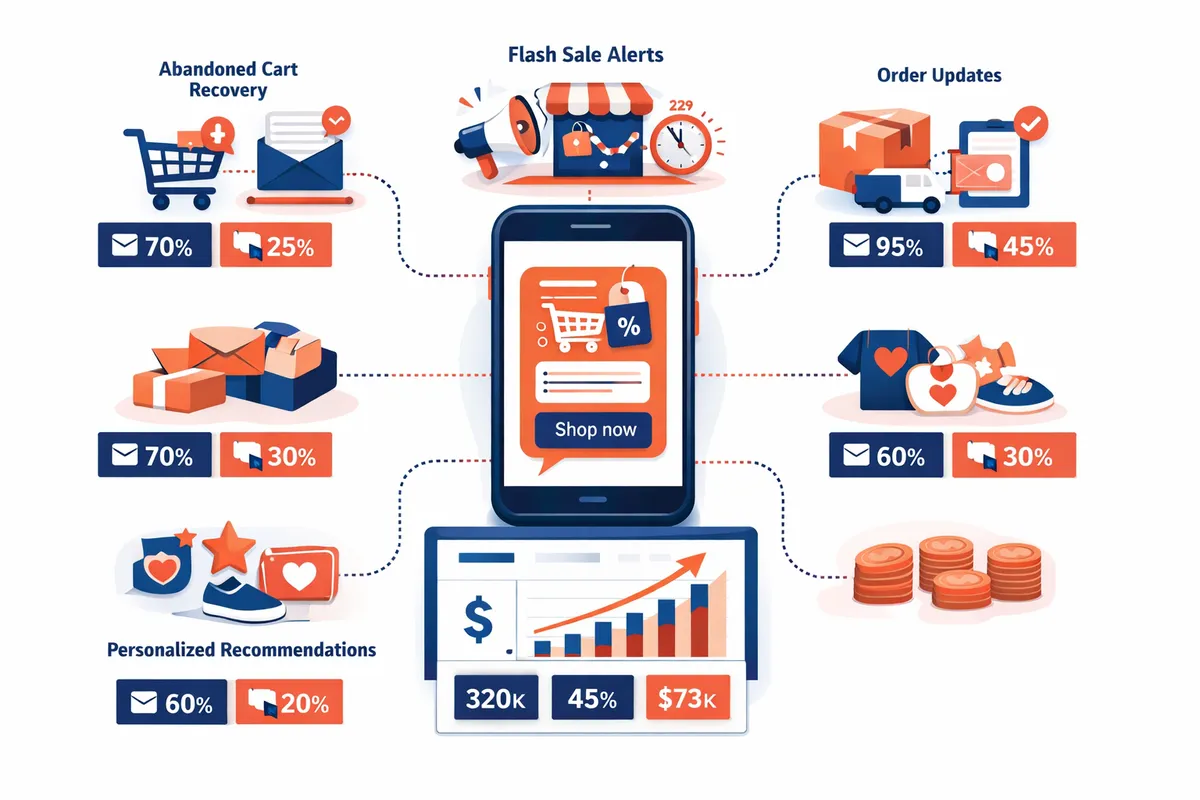
Cart abandonment is the single biggest revenue leak in e-commerce. The average cart abandonment rate is 70%. For a Detroit store processing $50,000 in monthly orders, that means roughly $116,000 in potential revenue is left in abandoned carts every month.
Email recovery sequences are the standard solution, and they work. But SMS recovery messages consistently outperform email by three to five times on conversion rate.
Timing is critical. The best time to recover an abandoned cart is within the first hour. After that, intent drops rapidly. Email might sit unread for hours. A text message reaches the customer immediately. Detroit shoppers who started an order during their lunch break in the Renaissance Center but got interrupted are most likely to complete it when reminded within 60 minutes.
Friction is minimal. A well-crafted cart recovery text includes a direct link back to the customer's cart. One tap. No logging in, no searching for the email, no navigating your site from scratch. The path from reminder to purchase takes seconds.
Personalization increases recovery. When the text references the specific product left in the cart, includes the customer's name, and perhaps offers a small incentive, recovery rates climb significantly. Generic "you left something behind" messages convert at 5 to 8%. Personalized messages with specific product mentions convert at 12 to 18%.
Building an Effective Cart Recovery SMS Flow
A strong recovery sequence uses multiple touchpoints without being aggressive.
Message 1 (1 hour after abandonment). A friendly reminder. "Hi Sarah, you left the Merino Wool Jacket in your cart. Here is your link to complete checkout: [link]." No discount. Just a reminder. This message alone recovers 8 to 12% of abandoned carts.
Message 2 (24 hours after abandonment). Add social proof or urgency. "Only 3 Merino Wool Jackets left in your size. Complete your order before they are gone: [link]." This converts another 3 to 5%.
Message 3 (48 hours, optional). Include a small incentive. "Still thinking about the Merino Wool Jacket? Here is 10% off to help you decide. Use code SAVE10: [link]." Use this step selectively for higher-value carts where the margin supports a discount.
These flows should trigger based on cart value, customer purchase history, and abandonment patterns. First-time visitors get different treatment than loyal repeat customers. High-value carts get more aggressive recovery than $15 orders.
Flash Sales and Time-Sensitive Promotions
SMS is the perfect channel for promotions where timing determines success.
Holiday and seasonal promotions. The competition for inbox attention during peak shopping periods is intense. Email open rates drop during Black Friday because every brand is sending. SMS cuts through the noise. E-commerce brands that combine email and SMS for major shopping events typically see 20 to 30% higher revenue than those using email alone. For Detroit businesses, tie promotions to local events: holiday markets at Campus Martius, Eastern Market seasonal launches, auto show weekend.
Product launches. When you drop a new product, your SMS subscribers are the first to know. Giving them early access creates excitement and drives immediate sales. A well-timed product launch text can generate 15 to 25% of first-week revenue.
Inventory clearance. Sitting on excess inventory costs money. A flash sale announced via SMS with a 48-hour window moves product quickly. The urgency of SMS drives faster action than email or social posts.
Limited quantity alerts. "Only 12 units remaining" messages create genuine urgency because the customer knows by the time they check email, the product might be gone. SMS delivery speed makes these alerts credible and effective.
The key to SMS promotions is restraint. Sending too many promotional texts causes opt-outs. Two to four promotional messages per month is the sweet spot for most e-commerce brands. Every message should deliver genuine value, not just noise.
Personalized Customer Journeys
The highest-performing SMS programs go beyond promotions. They build personalized communication flows triggered by customer behavior.
Welcome sequences. When a new subscriber joins your SMS list, a welcome message with a first-purchase discount converts at 15 to 25%. This is often the highest-converting SMS you will ever send.
Post-purchase follow-ups. A shipping confirmation text, a delivery notification, and a follow-up asking about their experience. These messages build trust and open the door for review requests and repeat purchases.
Restock reminders. For consumable products, automated reminders based on typical usage cycles bring customers back before they shop elsewhere. A Detroit coffee roaster reminding subscribers at the 25-day mark that their bag is running low recovers purchases that would otherwise go to competitors.
Birthday and anniversary offers. A personalized discount on someone's birthday feels like a gift, not marketing. These messages have some of the highest conversion rates of any SMS type.
Back-in-stock alerts. When a customer views or wishlists an out-of-stock item, a text notification when it returns creates high-intent traffic. These alerts convert at 25 to 35%.
VIP and loyalty messaging. Your top customers deserve exclusive communication. Early access to sales, VIP-only products, and personalized recommendations keep your best customers engaged and spending.
Compliance and List Building
SMS marketing is regulated under the Telephone Consumer Protection Act (TCPA) and additional state laws. Non-compliance carries statutory damages of $500 to $1,500 per unsolicited text message. A single complaint can result in significant legal exposure.
Compliance Requirements
Explicit opt-in. Every SMS subscriber must provide clear, documented consent to receive text messages. Pre-checked boxes do not count. Consent must be active and informed.
Clear opt-out. Every message must include a way to unsubscribe. "Reply STOP to opt out" is the standard. Opt-out requests must be honored immediately and automatically.
Message frequency disclosure. At sign-up, tell subscribers how often they will hear from you. "Expect 2 to 4 messages per month" sets proper expectations and reduces opt-outs.
Quiet hours. Do not send texts before 8 AM or after 9 PM in the subscriber's local time zone. For Detroit customers in the Eastern time zone, automated systems must respect these boundaries.
Building Your SMS List
Checkout opt-in. Add an SMS opt-in checkbox during checkout. Customers already providing their phone number for shipping notifications are primed to subscribe. This typically adds 15 to 25% of customers to your SMS list.
Website pop-ups. A well-timed pop-up offering a discount in exchange for a phone number captures visitors who might otherwise leave without purchasing. A pop-up after 30 seconds or on exit intent performs better than immediate pop-ups.
Social media promotion. Use your social channels to promote SMS-exclusive offers. "Text JOIN to 55555 for 15% off your first order" converts social followers into SMS subscribers you own.
Local events. For Detroit e-commerce brands with physical presence, Eastern Market pop-ups, Corktown festivals, and Brush Park community events are excellent list-building opportunities. QR codes at your booth or display convert in-person interest into digital subscribers.
Email cross-promotion. Your existing email list is a warm audience for SMS opt-in. Include SMS sign-up prompts in your email campaigns, especially for subscribers who consistently open emails.
Measuring SMS Marketing Performance
Revenue per message. Total revenue attributed to SMS divided by messages sent. Healthy benchmarks for e-commerce range from $0.50 to $2.00 per message depending on average order value and list quality.
Conversion rate. Cart recovery texts should convert at 8 to 18%. Promotional texts should convert at 2 to 5%. Welcome offers should convert at 15 to 25%.
Opt-out rate. Healthy opt-out rates sit below 2% per campaign. Above 5% signals you are sending too frequently or your content is not resonating.
List growth rate. Net new subscribers per month minus opt-outs. A healthy list grows by 5 to 10% monthly.
Customer lifetime value impact. Do SMS subscribers spend more over time than non-subscribers? For most e-commerce brands, SMS subscribers show 25 to 40% higher lifetime value.
SMS and Your Broader Marketing Stack
SMS is not a replacement for email, social media, or paid advertising. It is the amplifier that makes every other channel more effective.
A product launch email goes out at 9 AM. A follow-up SMS at 2 PM catches the people who did not open the email. A retargeting ad on Instagram that evening hits the people who clicked the SMS but did not buy. Each channel reinforces the others.
The brands winning in Detroit's e-commerce market are those that orchestrate their channels into a cohesive system. SMS handles urgency and personalization. Email handles depth and storytelling. Social handles discovery and community. Paid advertising handles acquisition. Together, they create a revenue engine that no single channel could build alone.
Frequently Asked Questions
Q: How much does SMS marketing cost for a Detroit e-commerce store?
Most SMS platforms charge $0.01 to $0.05 per message plus a monthly platform fee of $25 to $500 depending on list size. For a store with 5,000 SMS subscribers sending 8 messages per month, expect total costs of $200 to $500 monthly. Given that a single well-performing campaign can generate thousands in revenue, the ROI is typically 10x to 25x.
Q: How often should I text my e-commerce customers?
Two to four promotional messages per month is the sweet spot. Transactional messages like order confirmations and shipping updates do not count toward this limit. Start conservative and increase frequency only if opt-out rates stay below 2%.
Q: What is the difference between SMS and MMS for e-commerce marketing?
SMS is text only, limited to 160 characters. MMS supports images, GIFs, and longer text. For e-commerce, MMS messages with product images typically convert 15 to 20% higher than text-only messages. The cost per MMS is higher ($0.03 to $0.10), but the improved conversion rate usually justifies the investment for product promotions.
Q: Can SMS marketing work for small Detroit e-commerce stores?
Absolutely. SMS scales down effectively because the per-message costs are low and the conversion rates are high regardless of list size. A store with 500 SMS subscribers running a well-crafted campaign can generate meaningful revenue. The key is list quality over list size. 500 engaged subscribers outperform 5,000 disinterested ones.
Q: How do I avoid SMS messages being blocked by carriers?
Use a registered business phone number, avoid all-caps and excessive punctuation, include your business name in every message, honor opt-outs immediately, and maintain consistent sending patterns. Working with a reputable SMS platform handles most of these requirements automatically.
Q: What SMS platform works best for Detroit e-commerce businesses?
The best platform depends on your store's needs and existing tech stack. Klaviyo is strong for Shopify stores with existing email programs. Attentive is built specifically for e-commerce SMS at scale. Postscript integrates deeply with Shopify. For smaller Detroit stores just getting started, platforms like SMSBump offer affordable entry points with solid functionality.